.webp)

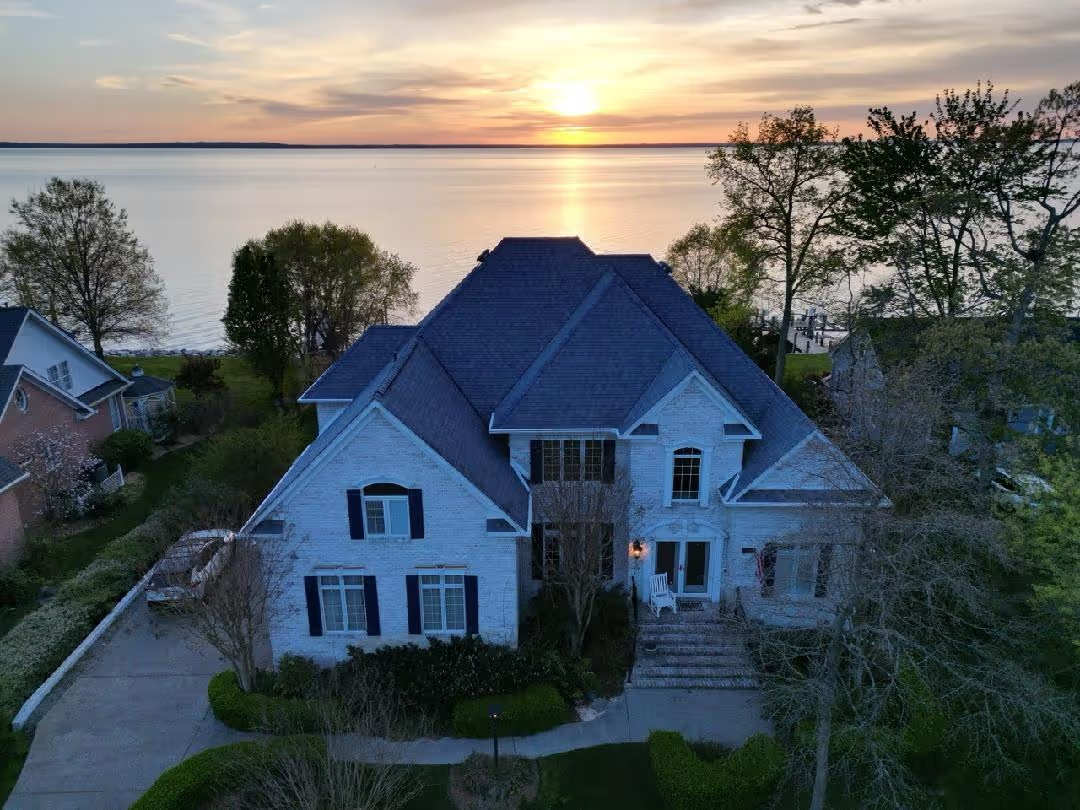
2026 Roofing and Remodeling Trends: Energy-Efficient Upgrades and Outdoor Living for Maryland Homes
If you have been thinking about a major home upgrade in 2026, you are not alone. According to the Joint Center for Housing Studies at Harvard University, U.S. homeowner remodeling spending is projected to reach a record high of $524 billion in early 2026. Across Maryland, that trend is playing out in kitchens, bathrooms, basements, and back yards. But there is one project many homeowners overlook when planning renovations: the roof.
Your roof connects directly to nearly every major upgrade on the 2026 priority list. It affects your energy bills, the comfort of your outdoor living space, your home's storm resilience, and even the resale value a new kitchen is supposed to deliver. This guide looks at what Maryland remodeling professionals are recommending in 2026, what the upcoming storm season may bring to Southern Maryland, how to choose the right roofing upgrades by county, and how to connect all of it with a design consultation.
Kitchen Upgrades
Kitchen remodeling in 2026 centers on smart, energy-efficient appliances and functional layouts that support modern cooking and entertaining. Energy Star-certified dishwashers, induction cooktops, and convection-range combinations are among the most requested upgrades. Open shelving and quartz or stone countertops continue to dominate design preferences across Maryland's suburban markets.
What does this have to do with roofing? A kitchen renovation is a significant investment in your home's value, typically running between $30,000 and $80,000 for a full remodel in the Maryland suburbs. That investment is not fully protected if your roof is aging. A failing roof that allows moisture into wall cavities, ceiling structures, or attic insulation can directly damage a newly renovated kitchen below it through water staining, mold, and structural swelling.
Bathroom Renovations
Spa-inspired bathrooms are the defining bathroom trend of 2026. Homeowners across the region are investing in walk-in showers with frameless glass, heated floors, floating vanities, and dual-flush low-flow fixtures. Real estate professionals consistently cite bathroom upgrades as among the highest-ROI improvements before a home sale.
Ventilation matters enormously here. In Maryland's humid climate, a bathroom with inadequate exhaust will develop moisture problems regardless of how premium the tile work is. That moisture problem rarely stays contained to the bathroom. It migrates upward into attic cavities, where it accelerates shingle degradation and deck rot from the inside out.
Finished Basements
Finished basements are in high demand across Maryland, driven by multi-generational living needs, remote work requirements, and the desire for dedicated media or recreation spaces. Converting an unfinished basement adds usable square footage without expanding a home's footprint, which matters in counties with strict lot coverage limits.
Finished basements require proper whole-home moisture management. If your attic ventilation is inadequate, condensation and heat transfer create humidity spikes that affect the entire building envelope, including the basement environment you have just invested in finishing.
Energy-Efficient Improvements
Energy efficiency has moved from an optional add-on to a central driver of renovation decisions. According to the National Association of Realtors, roughly 19 percent of remodeling projects in 2025 were motivated by energy efficiency gains, a share expected to grow in 2026 as utility costs continue rising across Maryland. Smart thermostats, LED lighting packages, upgraded HVAC systems, improved insulation, and high-performance window replacements are all on homeowners' lists.
Your roof is the most energy-critical surface on your home. It is the primary thermal barrier between outdoor temperature extremes and your conditioned living space. Upgrading to a properly ventilated roofing system with reflective shingles can reduce rooftop surface temperatures significantly, lowering the burden on your cooling system during Maryland's notoriously humid summers.
Outdoor Living Spaces
Outdoor living is a defining remodeling category for 2026. Covered patios, pergolas, outdoor kitchens, composite decks, and fire pit areas are being prioritized across all Maryland price ranges. Homeowners want usable outdoor space that functions as an extension of their interior, complete with durable materials, integrated lighting, and weather protection.
A roof replacement or upgrade is often the best companion project to an outdoor living addition. When you are investing in a high-quality deck or covered patio, the structure attaches directly to your home. A roof that is already compromised introduces leak risk at every connection point between the new outdoor structure and your exterior walls. Getting the roof addressed as part of a broader home upgrade cycle protects both investments.
2026 Storm Outlook for Southern Maryland: What Homeowners Should Expect
Maryland's location in the Mid-Atlantic corridor means its homes must survive an unusually wide range of weather threats across a single calendar year. For Southern Maryland homeowners in St. Mary's, Charles, Calvert, and Anne Arundel counties, understanding what 2026 may bring helps prioritize which roofing upgrades provide the most immediate protection value.
Spring and Summer Hail and Severe Thunderstorm Season
Hailstorms in Maryland occur almost exclusively between May and September, during the peak of convective thunderstorm activity. According to roofing and hail tracking data from the Maryland and Pennsylvania market, Anne Arundel, Harford, and Carroll counties have seen the most frequent hail events in recent years, and similar events are expected to continue across the state through the 2026 season. Weather pattern analysis indicates that 2026 hail activity is expected to follow patterns seen in recent years, with severe thunderstorms capable of producing hail ranging from pea-sized to golf-ball-sized across the region.
Even moderate-sized hail causes granule loss on standard asphalt shingles, which accelerates UV deterioration, reduces waterproofing effectiveness, and voids certain manufacturer warranties. Homeowners who have not had a professional inspection since a prior hail season should prioritize one before spring 2026 storms arrive.
Atlantic Hurricane Season and Tropical Remnants
The 2026 Atlantic hurricane season officially runs June 1 through November 30. Tropical remnants and nor'easters are the primary hurricane-related threats for Southern Maryland, arriving as sustained wind events and heavy rainfall rather than direct landfalls in most years. The 2026 season is expected to transition from La Nina toward ENSO-neutral conditions, with official NOAA seasonal outlooks to be released in May 2026.
The threat pattern that matters most for roof performance in this region is not direct hurricane winds but sustained elevated winds from tropical remnants combined with heavy rain. Wind-driven rain exploits any existing vulnerability: cracked ridge cap, missing flashing, aging pipe boot seals, or lifted shingles with broken adhesive strips. Roofs with these issues should not enter the 2026 hurricane season without professional attention.
The National Weather Service Baltimore/Washington office covers Maryland weather and provides storm advisories for Southern Maryland counties throughout the season. Homeowners can monitor current conditions and severe weather outlooks at weather.gov/lwx.
Winter Freeze-Thaw and Ice Dam Risk
Maryland winters create freeze-thaw cycles that are particularly damaging to aging roofing systems. When snow melts on a warm roof deck and refreezes at the cold eaves, ice dams form and force water backward under shingles. Maryland's variable winters, with days warming into the 40s followed by nights well below freezing, accelerate this cycle repeatedly throughout the season.
Our detailed guide on ice dam prevention and repair for Maryland homeowners covers this topic in full, including coverage under homeowners insurance and what to do when ice dams have already caused damage.
Energy-Efficient Roofing Upgrades That Actually Lower Power Bills
Replacing a roof is not just about storm protection. The right roofing system with proper ventilation and modern materials has a direct, measurable effect on energy consumption.
Attic Ventilation: The Most Overlooked Energy Upgrade
Proper balanced attic ventilation, with intake through soffit vents and exhaust through ridge vents, prevents heat buildup in the summer attic that would otherwise transfer directly into your living space. It also prevents moisture accumulation in winter that can degrade insulation R-values and encourage mold. Many Maryland homes, particularly those built before 1990, have undersized or unbalanced ventilation systems that quietly drive up energy costs year-round.
A re-roofing project is the ideal time to correct ventilation deficiencies because ridge vents, soffit venting, and related components are most efficiently installed as part of a complete system rather than as isolated retrofits.
Reflective and Algae-Resistant Shingle Technology
Modern architectural shingles include granule formulations that reflect more solar energy than standard dark shingles from 15 to 20 years ago. The U.S. Department of Energy has noted that cool roofing strategies can reduce rooftop surface temperatures significantly, reducing the heat transferred into conditioned living space and lowering cooling costs.
In Maryland's humid climate, algae resistance is equally important. The dark streaking from Gloeocapsa magma algae that appears on many older Maryland roofs is not just cosmetic. Algae reduces shingle reflectivity, which increases the heat absorbed and transferred into your attic. Premium shingles incorporating Scotchgard Protector technology by 3M inhibit algae growth without requiring copper strips or periodic chemical treatments.
Ice and Water Shield: Preventing Costly Interior Damage
Ice and water shield is a self-adhering rubberized membrane installed beneath shingles at eaves, valleys, and around roof penetrations. It creates an impermeable backup layer that stops water intrusion even when ice dams or wind-driven rain forces moisture under shingles. Maryland building code requires ice and water shield in specific locations, but extending coverage beyond minimum requirements provides meaningful additional protection in Southern Maryland's storm-prone environment.
Class 4 Impact-Resistant Shingles and Insurance Discounts
Class 4 impact-resistant shingles carry the highest available rating under industry testing standards, having passed rigorous hail impact testing without cracking or losing protective granules. Beyond superior protection, Class 4 shingles may qualify homeowners for insurance premium discounts, potentially offsetting a portion of the upgrade cost over time. Before selecting shingle grade, check with your homeowners insurance carrier about available discounts for impact-resistant roofing.
Localized Roofing Choices: Montgomery County vs. Calvert County
Maryland is not a uniform market. The roofing considerations for a Bethesda homeowner in Montgomery County differ meaningfully from those facing a homeowner in Prince Frederick or North Beach in Calvert County. Understanding local priorities helps you make the right material and system choices for your specific location.
Montgomery County: Premium Expectations and HOA Compliance
Montgomery County homeowners operate in a market that expects premium materials, strong curb appeal, and long warranty periods. HOA architectural guidelines in communities throughout Rockville, Gaithersburg, Germantown, and Potomac frequently specify allowable shingle colors, profiles, and materials. Many communities require architectural or designer-grade shingles rather than standard 3-tab products.
Energy efficiency codes in Montgomery County are among the stricter in the state. Homeowners upgrading roofs here benefit from prioritizing:
For Montgomery County homeowners, a roof replacement is part of a larger home value equation. Premium systems with proper documentation and registered manufacturer warranties support appraisal value in a competitive real estate market.
Learn more about our roofing work in Montgomery County.
Calvert County: Coastal Humidity, Bay Proximity, and Storm Prep
Calvert County occupies a peninsula between the Chesapeake Bay and the Patuxent River, which creates a specific set of roofing challenges. Bay-proximity humidity is higher and more persistent than in inland Maryland counties, accelerating algae growth, shingle granule adhesion breakdown, and wood rot in underlayment and deck systems. Properties near North Beach, Chesapeake Beach, and Solomons Island face conditions closer to coastal environments.
Calvert County homeowners should prioritize:
Calvert County outdoor living projects, including waterfront decks and covered patios that take advantage of bay views, should be planned in conjunction with a roof evaluation to ensure the home envelope is solid before exterior additions are made.
Explore our roofing services for Calvert County homeowners.
The Outdoor Living and Roof Connection Maryland Homeowners Miss
Outdoor living upgrades are among the most joyful home improvement investments. A covered patio with a pergola, an outdoor kitchen with a built-in grill station, or a composite deck looking out over a wooded Southern Maryland backyard genuinely improves daily life. But these projects also expose vulnerabilities in your roofing system that you may not have noticed before.
When a deck or patio addition attaches to your home's exterior, it creates new flashing intersections at the wall and roof connection points. If your existing roof has aged flashing, any new penetrations or connections are potential entry points for water infiltration. Contractors adding outdoor structures to a home with a 15-year-old roof are building on top of a liability.
The practical sequence for Maryland homeowners planning a full home upgrade in 2026 is to address the roof first, then invest in the outdoor living addition on top of a protected envelope. The reverse order risks damage to the new outdoor structure's framing and finishes from water that enters through an aging roof before the outdoor project is even completed.
Beyond sequencing, a premium roofing system with proper ventilation makes outdoor living more comfortable indirectly. Homes with superior thermal envelope performance maintain more consistent interior temperatures, which means less heat radiating through walls and ceiling into covered patio spaces that share a structural connection with the home.
How Southern Maryland Homeowners Can Prepare Now
Whether your 2026 home upgrade is centered on a kitchen renovation, a new deck, or a finished basement, the roof preparation steps are the same.
Schedule a professional roof inspection before spring storm season. March and April are the best months to get a current assessment of your roof's condition before hail season begins. A certified inspector can identify granule loss, flashing deterioration, seal strip failures, and deck issues that are not visible from ground level.
Check your attic ventilation during the inspection. Ask the inspector specifically about intake-to-exhaust balance. Many Maryland homes built before 2000 have inadequate soffit venting, which creates a heat and moisture trap regardless of ridge vent presence.
Review your homeowners insurance coverage. Ask your carrier whether your current roof age or material grade affects your coverage terms. Some Maryland carriers are implementing stricter roof age requirements for full replacement coverage as of the 2026 policy year.
Sequence your projects around the roof. If you are planning a kitchen renovation, bathroom remodel, finished basement, or outdoor living addition this year, confirm the roof's condition and expected service life before committing to interior investment schedules.
Explore financing options for a complete system upgrade. Golden Eagle Roofing offers 0% financing for 24 months to qualified Maryland homeowners, making it possible to upgrade to a premium system this spring without waiting.
For a complete breakdown of what a roof replacement costs across Maryland's counties and home sizes, see our Maryland roof replacement cost guide. For homeowners evaluating whether to repair or replace, our guide on why Maryland homeowners are upgrading older roofs to premium systems walks through the cost-benefit analysis in detail.
Frequently Asked Questions
What is the best roofing material for energy efficiency in Maryland?
Architectural asphalt shingles with reflective granule technology and algae-resistant coatings offer the best combination of energy performance, durability, and value for most Maryland homes. For maximum energy efficiency, pair the shingle upgrade with a balanced ventilation system and adequate attic insulation. Metal standing seam roofing provides the highest thermal performance and longest lifespan but at a significantly higher upfront cost, making it best suited for coastal properties or homeowners planning to stay in place for 30 or more years.
How does a new roof connect to lower energy bills?
A properly ventilated roofing system prevents the attic heat buildup that transfers into living space during Maryland summers, reducing cooling loads on your HVAC system. Reflective shingle granules reduce the solar energy absorbed by the roof surface. Improved ice and water shield and air sealing at penetrations reduce thermal bridging and moisture infiltration that degrades insulation performance over time. The combined effect varies by home but represents a real and ongoing reduction in monthly utility costs.
Should I replace my roof before or after a kitchen or bathroom renovation?
Replace the roof first. A kitchen or bathroom renovation is a significant investment in your home's interior, and that investment is directly at risk if an aging roof allows water infiltration into wall cavities, ceiling structures, or attic insulation above the renovated space. Addressing the roof first protects the renovation budget and eliminates the risk of discovering a moisture problem after interior finishes are already in place.
What roofing upgrades qualify for insurance discounts in Maryland?
Class 4 impact-resistant shingles may qualify for insurance premium discounts with certain Maryland carriers. A new roof installation, regardless of grade, typically improves coverage terms compared to a roof approaching or past its expected service life. Check with your homeowners insurance carrier directly before selecting materials, as discount availability varies by company and policy.
How long does a premium roofing system last in Southern Maryland's climate?
Premium architectural shingles installed by a certified contractor with proper ventilation, underlayment, and flashing details typically last 25 to 30 years in most of Maryland. Coastal-adjacent properties in Calvert County near the Chesapeake Bay, or waterfront locations in St. Mary's and Anne Arundel counties, may see lifespans closer to 20 to 25 years due to elevated humidity and salt air exposure. Metal standing seam systems installed in these same coastal locations routinely last 40 to 60 years with minimal maintenance.
Does Golden Eagle Roofing serve Montgomery County and Calvert County?
Yes. Golden Eagle Roofing serves homeowners across Maryland, including Montgomery County, Calvert County, St. Mary's County, Charles County, and Anne Arundel County. Our team includes HAAG Certified inspectors and we are an Atlas Pro+ certified contractor, which means we can provide extended warranty coverage on qualifying installations.
Schedule Your Free Design Consultation
2026 is a strong year to invest in your home. Whether you are planning a kitchen renovation, adding outdoor living space, or simply want to know what your current roof's condition means for your home improvement timeline, a professional assessment is the right starting point.
Golden Eagle Roofing provides free roof inspections and design consultations for Maryland homeowners in Montgomery County, Calvert County, St. Mary's County, Charles County, and Anne Arundel County. As a veteran-owned business with Atlas Pro+ certification and HAAG-certified inspection capability, we give you an honest picture of your roof's condition and a clear recommendation based on your home's specific needs, climate exposure, and upgrade goals.
Contact us today to schedule your free consultation and connect your 2026 remodeling plans with a roofing system that supports every upgrade on your list.